

Summer Is Over—Is Your Nissan Ready for Fall Driving in Lake Havasu City?
After months of triple-digit heat, blazing pavement, road trips, lake days, dust, and hard-working air conditioning, fall finally brings some welcome relief to Lake Havasu City.
Your Nissan may appreciate the break, too.
But cooler weather does not mean vehicle maintenance suddenly becomes less important. In fact, fall is one of the best times to give your Nissan a post-summer checkup and make sure it is ready for cooler mornings, changing temperatures, shorter days, and the road trips that come with some of the best driving weather of the year in Western Arizona.
If you followed our summer guide, Keep Your Nissan Cool, Comfortable, and Road-Trip Ready This Summer, think of this as Part Two.
Summer was about surviving the heat.
Fall is about checking what the heat left behind—and getting ready for what comes next.
First Things First: Give Your Nissan a Post-Summer Checkup
Arizona summers are demanding on vehicles.
High temperatures can place additional stress on batteries, tires, cooling systems, rubber components, fluids, and other parts that spent months operating in extreme conditions.
That means the arrival of cooler weather is a good opportunity to take a fresh look at your Nissan rather than simply assuming that making it through summer means everything is ready for fall.
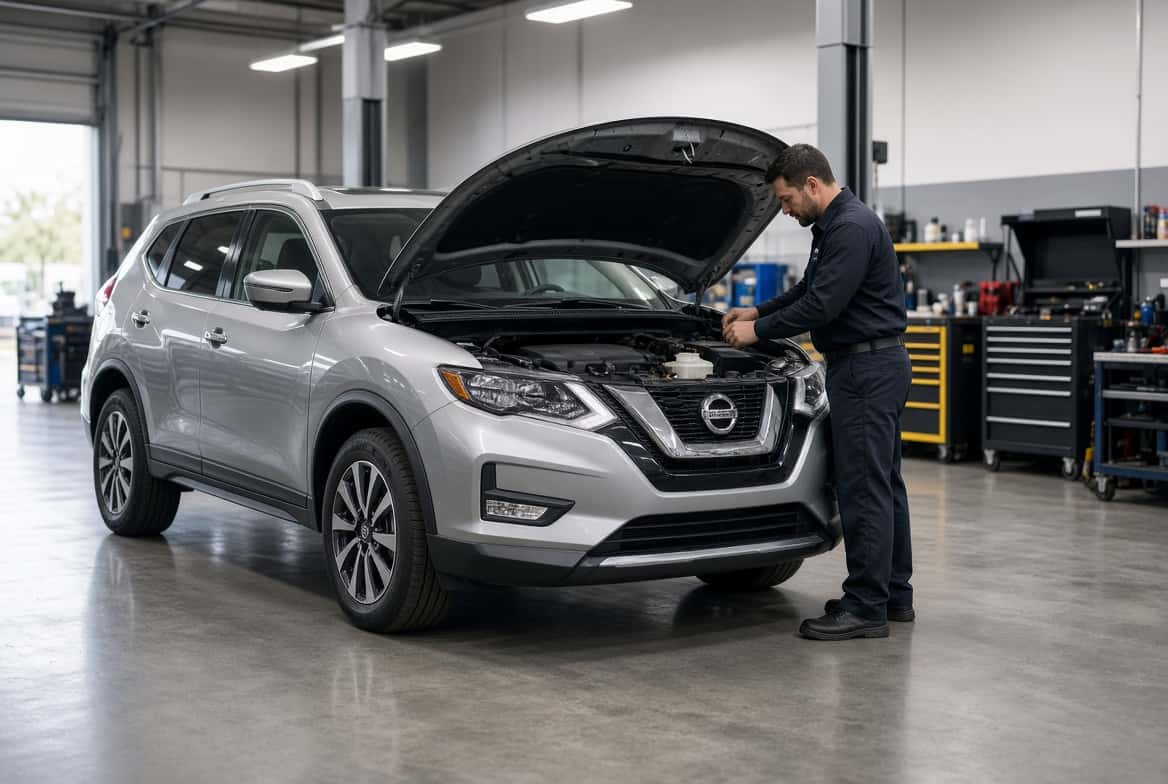
A basic seasonal inspection can include:
- Tire condition and pressure
- Battery condition
- Engine oil and other fluids
- Brake condition
- Windshield wipers
- Exterior lighting
- Cabin and engine air filters when applicable
- Cooling and climate-control system condition
Whether you drive a Nissan Rogue, Pathfinder, Kicks, Frontier, Murano, Sentra, Armada, LEAF, or another Nissan model, the exact maintenance your vehicle needs depends on its model year, mileage, equipment, and maintenance history.
Cooler Mornings Can Change Your Tire Pressure
One of the easiest seasonal changes to notice can happen before you even leave the driveway.
Outside temperature affects tire pressure. As temperatures cool, the air inside your tires can contract and inflation pressure can decrease.
That means a tire that seemed properly inflated during hotter weather may show a lower pressure reading on a cool fall morning.
Check tire pressure when the tires are cold and use the recommended pressure listed for your specific vehicle—typically found on the tire information label inside the driver’s door area. Do not simply inflate the tires to the maximum pressure printed on the tire sidewall.
Fall is also a good time to inspect:
- Tread depth
- Uneven tread wear
- Cracks or other visible damage
- Bulges in the sidewall
- Nails or other embedded objects
If the steering wheel vibrates, your Nissan pulls to one side, or you notice unusual tire wear, an alignment or tire inspection may also be worth considering.
Planning a Fall Road Trip?
Tire condition becomes even more important when your drive takes you away from Lake Havasu City.
A fall trip toward Kingman, Prescott, Flagstaff, Las Vegas, Southern California, or other higher-elevation destinations can expose your vehicle to temperatures and road conditions that feel very different from what you left behind in Lake Havasu.
Checking your tires before the trip is much easier than discovering a problem miles from home.
Your Battery Survived Summer. Now Make Sure It Is Ready for Cooler Weather.
Summer heat and cooler weather can create a one-two punch for an aging automotive battery.
Extreme heat can accelerate battery wear, and then colder temperatures can reduce the battery’s available starting power. That means a battery weakened during summer may finally begin showing symptoms when mornings start getting cooler.
Watch for signs such as:
- Slower-than-normal engine cranking
- Clicking when you try to start the vehicle
- Dim exterior or interior lights
- Electrical accessories behaving unusually
- Corrosion around the battery terminals
- A battery or charging-system warning light
A battery test can provide a much better picture of its condition than waiting to find out whether your Nissan starts one morning.
And even though Lake Havasu City winters are much milder than many parts of the country, Western Arizona drivers often travel. A healthy battery becomes even more important if your fall or winter plans include destinations where temperatures drop considerably lower overnight.
Check Your Wipers After a Long Arizona Summer
Your windshield wipers spend the entire summer sitting against a piece of glass that can become extremely hot.
That kind of heat and sun exposure can be tough on rubber.
By fall, wiper blades that looked fine earlier in the year may begin:
- Leaving streaks
- Skipping across the windshield
- Chattering during operation
- Missing sections of the windshield
- Showing visible cracks or deterioration
Fall weather can bring changing conditions, and road trips can take you into rain or colder weather with little warning. Clear visibility should not become something you think about only after the first drops hit the windshield.
While you are checking the wipers, top off the windshield washer fluid and inspect the windshield for chips or cracks that may have appeared during summer driving.
Shorter Days Mean Your Lights Matter More
Fall means fewer daylight hours, and that can translate into more driving after sunset.
Take a moment to check the lights around your Nissan, including:
- Headlights
- High beams
- Brake lights
- Turn signals
- Taillights
- Hazard lights
- License-plate lights
If one headlight seems noticeably dimmer than the other or an exterior bulb has stopped working, take care of it before your next nighttime drive.
Good lighting is especially important on longer stretches of highway outside Lake Havasu City where ambient lighting can be limited.
Fall Is a Good Time to Revisit Your Oil and Fluids
If summer meant extra mileage, long highway trips, towing, stop-and-go driving, or plenty of time spent with the A/C running, fall provides a natural reminder to check where your vehicle stands in its maintenance schedule.
Depending on your Nissan, mileage, and service requirements, important items may include:
- Engine oil
- Engine coolant
- Brake fluid
- Windshield washer fluid
- Transmission-related fluids when inspection or service is specified
There is no universal oil-change or fluid-service interval that applies to every Nissan, so use the maintenance information for your specific vehicle rather than relying on a generic mileage rule.
If you are not sure when something was last serviced, your vehicle’s maintenance history is a better place to start than guessing.
Don’t Put Away the A/C Just Yet
Yes, this is a fall article.
No, we’re not pretending Lake Havasu suddenly becomes Alaska in October.
Warm afternoons can stick around well into fall, so your air-conditioning system may still have work to do.
At the same time, cooler mornings may mean you start using the heater and defroster again.
That makes fall a useful time to make sure your vehicle’s climate-control system can handle both sides of the temperature swing.
Pay attention if you notice:
- Weak airflow
- Unusual smells from the vents
- A/C that does not cool properly
- A heater that takes unusually long to warm the cabin
- Windows that do not defog effectively
A dirty cabin air filter can also restrict airflow, so it may be worth checking depending on your vehicle’s maintenance schedule and driving environment.
Check Your Brakes Before Fall Road-Trip Season
Cooler Arizona weather tends to make getting out of town a lot more appealing.
That might mean a weekend drive toward Parker, Bullhead City, Kingman, Phoenix, Las Vegas, Prescott, or somewhere farther north where the scenery—and temperatures—change quickly.
Before adding another round of highway miles to the odometer, pay attention to how your brakes feel and sound.
Possible warning signs include:
- Squeaking or grinding noises
- Vibration while braking
- A brake pedal that feels different than normal
- The vehicle pulling during braking
- Longer-than-expected stopping response
- Brake or ABS warning lights
If something has changed, having the system inspected can help determine whether pads, rotors, fluid, or another component needs attention.
Don’t Forget the Dust
Cooler temperatures do not make Western Arizona’s dust disappear.
Months of driving through heat, wind, construction, desert roads, and everyday traffic can leave air filters doing plenty of work.
Your Nissan may use both an engine air filter and a cabin air filter, depending on the vehicle.
The engine air filter helps prevent dirt and debris from entering the engine’s air-intake system, while the cabin filter helps filter air entering the passenger compartment through the climate-control system.
Replacement intervals vary by vehicle and driving conditions, so they should be inspected or replaced according to the maintenance recommendations for your Nissan.
Heading to Higher Elevations? Pack for More Than Lake Havasu Weather
One of the best things about fall in Arizona is how many different climates are only a road trip away.
You may leave Lake Havasu City in comfortable desert weather and arrive somewhere with much colder temperatures later the same day.
Before heading toward higher elevations, it is worth thinking beyond your normal local-driving routine.
A simple fall road-trip check can include:
- Tire pressure and tread
- Battery condition
- Engine oil and fluids
- Brakes
- Wipers and washer fluid
- Exterior lights
- Heating and defrost operation
- Your spare tire or tire-repair equipment, if equipped
It is also smart to check the weather and road conditions for your actual destination—not just the weather outside your front door.
Your Fall Nissan Maintenance Checklist
Need the condensed version? Here it is.
Before your next fall road trip, consider giving your Nissan a quick seasonal check:
- ✓ Check tire pressure
- ✓ Inspect tire tread and overall condition
- ✓ Test the battery
- ✓ Check engine oil and applicable fluids
- ✓ Inspect windshield wipers
- ✓ Top off washer fluid
- ✓ Test headlights, brake lights, and turn signals
- ✓ Pay attention to brake condition
- ✓ Check heating, A/C, and defrost operation
- ✓ Review your maintenance schedule
You may not need service in every one of these areas. The point is to know where your Nissan stands before cooler weather and fall travel reveal something you could have caught earlier.
Why Fall Maintenance Matters in Lake Havasu City
Fall vehicle care in Western Arizona looks a little different than it does in places where October means snow tires and frozen windshields.
Here, fall is a transition season.
The extreme heat begins to ease. Mornings become cooler. Daylight gets shorter. Road-trip weather gets better. And many Lake Havasu City drivers begin spending more time on the highway or traveling into parts of Arizona, Nevada, and California where conditions can change significantly.
That makes fall the perfect time to accomplish two things at once:
Check for wear left behind by summer and prepare your Nissan for the cooler months ahead.
It is a simple seasonal habit that can help keep your Rogue, Pathfinder, Frontier, Kicks, Murano, Sentra, Armada, LEAF, or other Nissan ready for wherever fall takes you.
Why Choose Anderson Nissan for Fall Vehicle Service?
At Anderson Nissan in Lake Havasu City, Arizona, our service department works with Nissan owners throughout the year—from the hottest days of summer to cooler fall road-trip season.
Our service team can assist with maintenance and repairs including:
- Oil changes
- Tire rotations and tire service
- Wheel alignments
- Brake and rotor service
- Battery service
- Vehicle inspections
- Other maintenance based on your Nissan’s specific needs
Anderson Nissan also uses Genuine Nissan parts for applicable Nissan maintenance and repair needs.
Located at 3842 North Highway 95 in Lake Havasu City, Arizona, Anderson Nissan is a convenient service resource for drivers throughout Lake Havasu City, Parker, Bullhead City, Kingman, Needles, and surrounding Western Arizona communities.
How Often Should You Service Your Nissan?
There is no single maintenance schedule that applies to every Nissan.
The right service timing depends on factors such as:
- Your Nissan model and model year
- Mileage
- Engine and drivetrain
- Your maintenance history
- Your normal driving conditions
- Towing or heavy-load use
- Exposure to extreme temperatures and dusty conditions
Your owner’s manual and the maintenance information for your specific Nissan should guide when scheduled maintenance is required.
If you are unsure what your Nissan currently needs, the Anderson Nissan service team can review your vehicle, mileage, condition, and maintenance history and help determine the appropriate next steps.
Get Your Nissan Fall-Ready in Lake Havasu City
Summer asked a lot from your vehicle.
Fall is your chance to return the favor.
Before the next cool morning, weekend road trip, holiday drive, or run up to higher elevations, take a little time to make sure your Nissan is ready for the changing season.
A tire-pressure check, battery test, fluid inspection, fresh set of wipers, or routine service visit today can be a lot more convenient than discovering a problem somewhere between Lake Havasu City and your destination.
And after surviving another Western Arizona summer, your Nissan has earned a little attention.
-TJ
More from Anderson Nissan
2027 Nissan Sentra Review: Smart Style, Serious Tech, and Everyday Efficiency
The 2027 Nissan Sentra proves that choosing an affordable compact sedan does not mean settling for something basic. With sharp styling, impressive standard technology, excellent fuel economy, a comfortable cabin, and a surprisingly deep list of driver-assistance features, the Sentra packs a lot into an easy-to-drive package. At Anderson Nissan in Lake Havasu City,…
Which Nissan Rogue Trim Is Right for You?
Shopping for a Nissan Rogue is a little like picking the perfect road-trip snack. There is no wrong answer, but there is definitely one that fits your personality best. At Anderson Nissan in Lake Havasu City, Arizona, the Nissan Rogue lineup gives drivers several different ways to enjoy one of Nissan’s most popular SUVs….
0 comment(s) so far on Summer Is Over—Is Your Nissan Ready for Fall Driving in Lake Havasu City?